Pruning and Training: Shape a Bougainvillea Showpiece
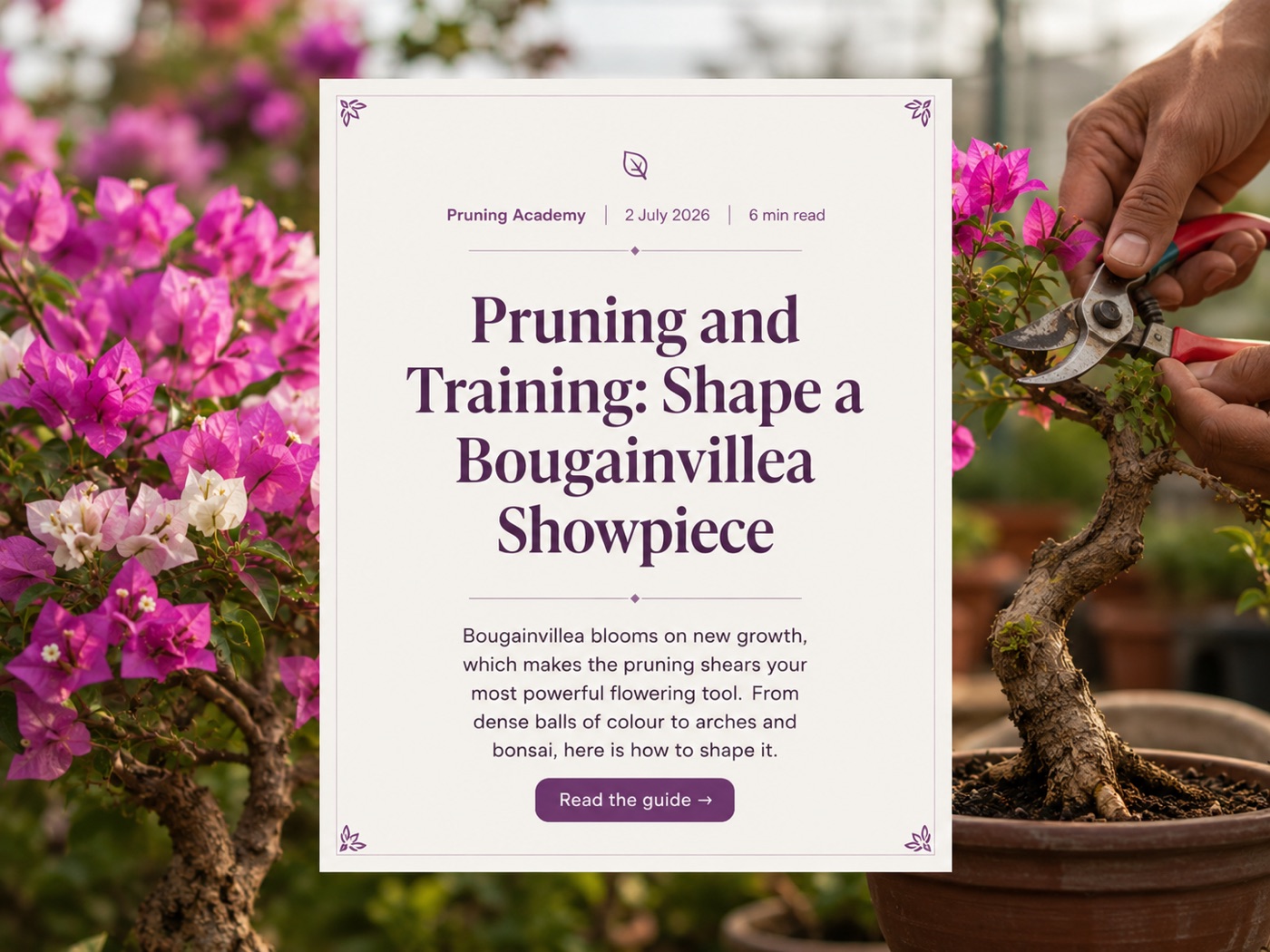
One principle explains everything about bougainvillea pruning: flowers form on the tips of new shoots. Every correct cut multiplies shoot tips, and every extra tip is a future cluster of colour. A never-pruned plant becomes a sparse, leggy tangle; a regularly pruned one becomes a solid ball of bloom.
The two cuts that matter
- Tip pruning, after every flush: once a branch finishes flowering, cut it back by about a third. It will fork into two or three new shoots, doubling your next display.
- Hard pruning, late February: before the spring flush, cut back long unruly branches, remove dead or crossing wood, and set the plant's overall shape for the year.
Stop all pruning from October. The shoots you leave in autumn carry the winter flower show — see our full seasonal calendar for the rest of the year's rhythm.
Kill the water shoots
Long, green, thorny stems that shoot straight up are water shoots. They rarely flower. Cut them off at the base whenever they appear, in any season — they are also one of the three usual suspects behind a plant that will not bloom.
Training: arches, standards and bonsai
- Arches and trellises: bougainvillea is a scrambler, not a true vine, so it cannot grip by itself. Let a few strong shoots run long and tie them to the structure with jute. Prune the side shoots after each flush to build a dense canopy of colour.
- Standards: train a single strong stem up an iron stake and keep pinching the top into a ball for a striking lollipop tree.
- Bonsai: bougainvillea is one of the world's best tropical bonsai subjects. The trunk ages beautifully, and root restriction produces miniature floral explosions. Any root work should be done in February, removing no more than 15 percent of the root mat.
A word on safety
Wear thick gloves and long sleeves. Bougainvillea thorns are sharp and brittle, and their sap makes a scratch sting far longer than it should. Sharp, clean secateurs make cleaner cuts and fewer regrets.
Ready to put this into practice?
Shop 400+ VarietiesFrequently Asked Questions
Does pruning make bougainvillea flower more?
Yes. Bougainvillea flowers on the tips of new growth, so tip pruning after every flush forks a branch into two or three new shoots, and every extra tip is a future cluster of colour.
When should you stop pruning bougainvillea?
Stop all pruning from October onward. The shoots left standing through autumn are what carry the winter flowering show.
Can bougainvillea be trained as a bonsai?
Yes — it is one of the world's best tropical bonsai subjects. The trunk ages beautifully and root restriction produces miniature floral displays; do any root work in February and remove no more than 15 percent of the root mat at a time.